
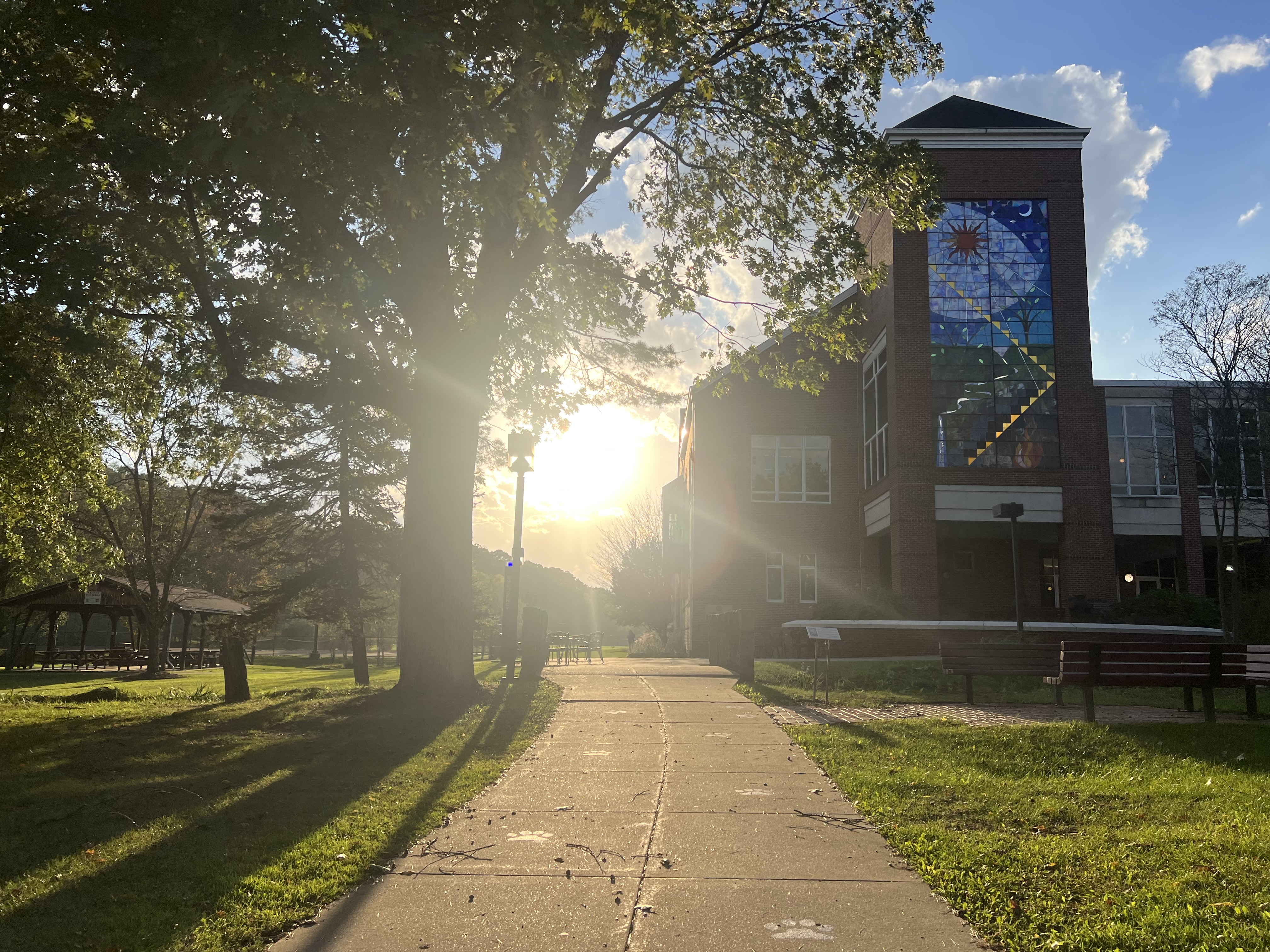
Changes to General Education Requirements Underway at All Pitt Campuses
New designations go into effect in Fall 2027
Beginning in Fall 2027, the University of Pittsburgh’s general education standards will be changing.
According to Pitt-Greensburg Registrar and Head of Advising Beth Tiedemann, the main goal is to update and streamline university-wide curriculum standards and ensure students get the foundation they need to succeed on and off campus.
“What they’re trying to do is develop a curriculum that is applicable and meaningful in our current world, and that will prepare students to enter that world in a way that they feel well- equipped and informed and prepared for,” Tiedemann said.
The new requirements will group general education classes into several categories of learning goals, including:
- Inquiring, Analyzing, Problem Solving;
- Communicating, Creating, Expressing;
- Engaging Responsibly
- Understanding Local-Global Contexts and Challenges;
- Experiential Learning
According to Tiedemann, students currently enrolled at Pitt-Greensburg won’t necessarily be affected by the changes, though they can benefit from them.
“Continuing students do not need to worry,” Tiedemann said. “We’ll be running two sets of requirements for several years, until all of our continuing students have graduated.”
So while continuing students do not need to worry about these changes, if students think they will do better with the new general education requirements, they will be allowed to switch, Tiedemann said.
One of the hallmarks of the new requirements is a focus on experiential learning, which means students can use what they learn in the classroom and apply it in real-world situations.
“Maybe it’s hands-on research. Maybe it’s working on a substantial group project in a class. Maybe it is an internship.” Tiedemann said. “Something where you’re really actively doing and applying (that knowledge).”
University administrators are now figuring out how current classes fit into the new requirements. In the coming months, a university-wide committee of faculty will review and approve classes for general education.
According to Pitt’s main website and Ms. Tiedemann, Pitt will organize these classes in three tiers.

Tier one includes classes that will be required for all students at all campuses. Tier two will include campus-specific requirements. Tier three will include major-specific classes, which, according to the Provost’s Office, will be managed and supported by faculty and committees in each department.
Some results of these changes, according to Ms. Tiedemann, are the development of new DOCs for each major, the opportunity for Pitt-Greensburg to offer new classes, and the chance for students to specialize in “areas of distinction.”
Some examples of distinctions currently at Oakland that are being considered for Pitt-Greensburg include: Civic Learning; Emerging Technologies; Global Learning; Health & Well-being; Innovation & Entrepreneurship; and Sustainability.
All these changes mean students and advisors will be more actively using tools in PeopleSoft–including Advisement reports, Degree Planner, and What If Reports–to better map out their schedules.
“We are now really looking at how to map all the current existing classes on courses onto the gen eds, figure out if there are gaps, how to address those gaps, and get all of that built and put into PeopleSoft by January,” Tiedemann said. “(Ideally) there will be a little more flexibility, and with some intention about learning outcomes, we can move away from checking boxes.”
Overall, Tiedemann is excited about the opportunities the new general education requirements will offer.
“This will give students an exposure to a variety of information, ways of thinking, ways of interacting with and understanding the world,” Tiedemann said.
***
About Beth Tiedemann:
Beth Tiedemann came to Pitt for her PhD in sociology. After her first year, she got an assistantship as an academic advisor at The Dietrich School of Arts & Sciences. After a few years, she realized how much she enjoyed it and knew she could make it a career/job. She then decided to become a full-time academic advisor and received her master’s in sociology, a second master’s degree in school counseling, and nearly completed her Ph.D. (all but dissertation). Something that students may not know is that before she was the registrar, she was the director of career services here at the Greensburg campus and hired Dorothy Zilic and Kristen Stratton. After that, and with changes on campus, she applied to be registrar and director of advising and has been in that role for what is going to be 10 years. Even after 10 years, Ms. Tiedemann said: “ I still love working with students, and I like problem solving, and I like puzzles, and I like to help make things work well. So I think that’s why this job still, after all these years, suits me, and I love to collaborate.”

Leave a Reply