

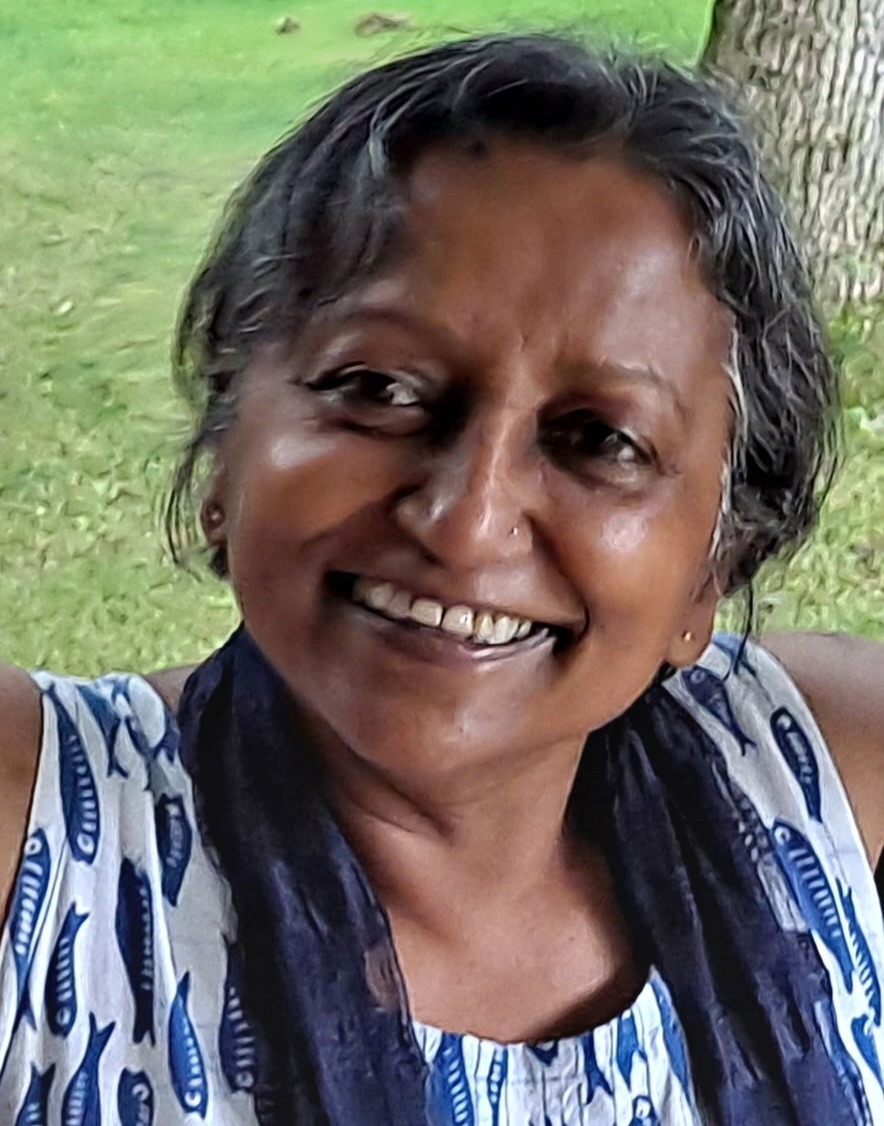
Pitt-Greensburg mourns the loss of Professor of Anthropology Dr. Lipika Mazumdar. Memorial services will be held on Thursday, Oct. 8 at 5 p.m. in Campana Chapel.
Over the summer, Assistant Professor of Anthropology Dr. Lipika Mazumdar tragically passed away on July 12.
A memorial service commemorating Dr. Mazumdar’s life and her decades-long dedication to Pitt-Greensburg will be held on Thursday, Oct. 8 at 5 p.m. in Campana Chapel. The service will be open to the public.
Dr. Pilar Herr, associate professor of Latin American history and long-time friend and colleague of Dr. Mazumdar, is overseeing the memorial service.
“She (Dr. Mazumdar) had an enormous heart,” Dr. Herr said. “She really, really cared about students, what their futures were going to be, and how they were going to get there.”
According to Dr. Herr, Dr. Mazumdar always went above and beyond for her students. She would meet up with students when they were struggling with classes to help them succeed.
“She would have students come to her house and she’d make them a meal,” Dr. Herr said. “She would go out of her way to make sure that the students understood the theory, even if that meant meeting with students outside of not just office hours or class hours, but on weekends. And few people know about that, that she really went out on a limb for her students.”
Dr. Mazumdar also brought the world to students at Pitt-Greensburg. Born in India, Dr. Mazumdar was devoted to organizing Village events that would help students learn more about South Asia. She organized several study abroad trips to India, sharing her love for and insights about her home country with the Pitt-Greensburg community.
Passionate about world news and current events, Dr. Mazumdar also organized an informal discussion group, “News of The World,” where students could come to learn about what was happening outside of the United States.
“She would just be there to talk about the news of the day with any students who came through,” Dr. Herr said. “Those discussions got a following. Students who really wanted to know about and understand (the world) would be there. That was something so uniquely her. She cared so much.”
According to an article in “The University Times,” Dr. Mazumdar, a cultural anthropologist, taught at least 44 different courses while at Pitt — ranging from Introduction to Anthropology to singular courses on Gender, Race and Class; Nationalism and the Postcolonial Experience: South Asia; Identities Beyond National Boundaries: Migration in Global Perspective; Transaction and Exchange in Non-western Cultures; and many more.
Dr. Mazumdar was born in the state of Bengal, India. She earned simultaneous bachelor of arts degrees in anthropology and English from the University of Wyoming in 1984, then her master of arts degree in anthropology from the same institution in 1987.
That same year she joined Pitt as an anthropology teaching fellow, adding stints as an instructor in the College of General Studies for many individual semesters through 1994, when she began single or several-year periods as a visiting professor, fellow or visiting instructor in anthropology at Loyola University of Chicago, St. Lawrence University, Appalachian State University and Oberlin College.
She did her PhD in anthropology at Pitt in 1998, with a thesis on “Sacred Confluence: Worship, History, and the Politics of Change in a Himalayan Village” in India, In 2002, she joined Pitt–Greensburg as an assistant and a research associate professor.
Through the years, her research subjects have included the question of identity among Tibetan refugees in India; the Chinese, Indian, Korean, Japanese, Filipino, Vietnamese and Syrian-Lebanese communities in Allegheny County, as part of the Steel Industry Heritage Task Force; doctor-patient communication of healthcare options at UPMC; the impact of Hindu nationalism on the Himalayan village where she researched her dissertation; and local religious and educational environmental engagement and activism (including human-animal dynamics) in Leh, India.
She also lectured locally and throughout North America on many of her course and research topics, and served her campus and University on dozens of academic and faculty senate committees.
She is survived by her husband, Philip Bittenbender, sister Malabika “Mala” Mukherjee and brother Abhinav “Romi” Mazumdar.

Leave a Reply