
Pitt-Greensburg science students can now participate in two HHMI SEA programs
Courtesy of Media Relations
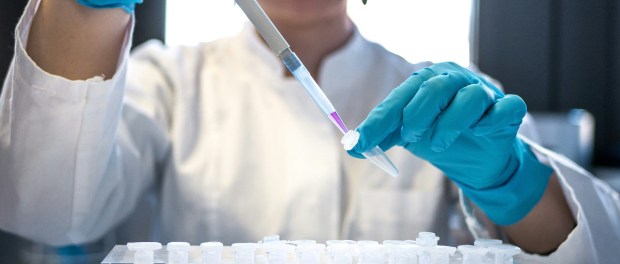 photo by julia koblitz
GREENSBURG, PA – Students at the University of Pittsburgh at Greensburg are now able to participate in two Science Education Alliance (SEA) programs: SEA Phage Hunters Advancing Genomic and Evolutionary Science (SEA-PHAGES) and SEA Gene-Function Exploration by a Network of Emerging Scientists (SEA-GENES). Supported through the Howard Hughes Medical Institute (HHMI), the SEA programs are a national collaboration led by Graham Hatfull, PhD, Eberly Family Professor of Biotechnology and HHMI Professor at the University of Pittsburgh.
Sarah J. Swerdlow, PhD, assistant professor of biology, manages the program at Pitt-Greensburg. In fall 2024, the SEA-PHAGES Phage Hunters Lab was first offered to students as part of the microbiology laboratory experience. Students gathered soil samples from campus and other locations, brought them back to the laboratory, and used microbiology technology to grow and discover new bacteriophages (viruses that infect bacteria). Students in that lab course discovered 10 novel bacteriophages.
Now in its second year (fall 2025), Pitt-Greensburg students participating in the SEA-PHAGES Phage Hunters Lab class discovered 15 novel bacteriophages. Once discovered, the phages are sent to a collaborating science faculty member to be viewed live via a specialized microscope called a Transmission Electron Microscope (TEM).
“The students call this ‘Phage Picture Day,’” said Swerdlow. “It’s exciting for them to see the results of their work since the PHAGES are so small, and the TEM is the best way to observe the phages. Because the photo reveals are done via a Zoom session, the students see their results live and in real-time, which offers a better understanding of how the TEM works.”
In spring 2025, Jen Ingram and Christy Zagorac, biology instructors, taught the SEA-PHAGES Bioinformatics Lab, where first-year students were able to determine the genes in two of the novel bacteriophages discovered in the fall 2024 Phage Hunters Lab. The two faculty members will teach the lab course again in spring 2026 where the students will work to determine the genes in two of the novel bacteriophages from the fall 2025 Phage Hunters Lab.
With the implementation of the SEA-GENES program in fall 2025, upper-level students continued to develop their microbiology lab skills when they were assigned to the genome of a previously discovered bacteriophage. Swerdlow and her students were assigned a bacteriophage named “ZoeJ.”
“I was thrilled to work with ‘ZoeJ’ since it’s been such a seminal part of the Hatfull labs’ research,” said Swerdlow of this opportunity. “This bacteriophage has been the focus of several research papers—including one where they treated a patient with a Mycobacterium abscessus infection.” The goal of the project is to take each of the genes in the phage and figure out if any of the individual phage genes are toxic to bacteria by using several different molecular cloning techniques. Additional details about the “ZoeJ” research can be found here: https://bit.ly/PITT-HATFULL-LAB.
“In addition to learning essential laboratory techniques, the students are practicing critical thinking skills and doing real research and contributing to the scientific literature,” explained Swerdlow. “The science the students find is two-fold: they are finding solutions for patients with antibiotic-resistant bacterial infections, and they are helping to determine the underlying scientific mechanisms of phage biology.”
As of this writing, at Pitt-Greensburg, 61 students have participated in the SEA-PHAGES program, and 10 students have participated in the SEA-GENES program. Both courses are also part of the curriculum of the David C. Frederick Honors College at Pitt-Greensburg, providing opportunities for additional expansion in both the number of students participating and the types of individual projects undertaken by students.
 The Insider
Leave a comment