
Incorporating More Outside Play During School: Q&A with Baggaley Elementary School Speech Teacher Annie Brandt
by Alexis Osborne
 Photo Courtesy of Jessica Knepper
What if there was a way for kids to have more time outside during school other than recess? Well, Annie Brandt has thought of a way for that to happen. Brandt is a speech teacher at Baggaley Elementary School, where she has created a program called LEAP. Brandt proposed the idea to the district’s school board in April 2022 and the program began in the 2022-2023 school year. It involves kids getting a break in the day and having the chance to go outside and play. Brandt recently gave a presentation at Pitt-Greensburg to an education course, explaining all about the program. Reporter Alexis Osborne had a chance to ask her a few questions about LEAP.
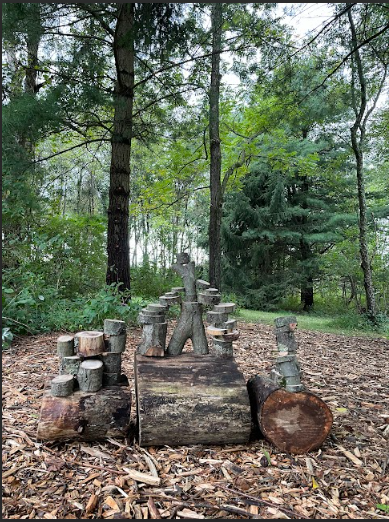
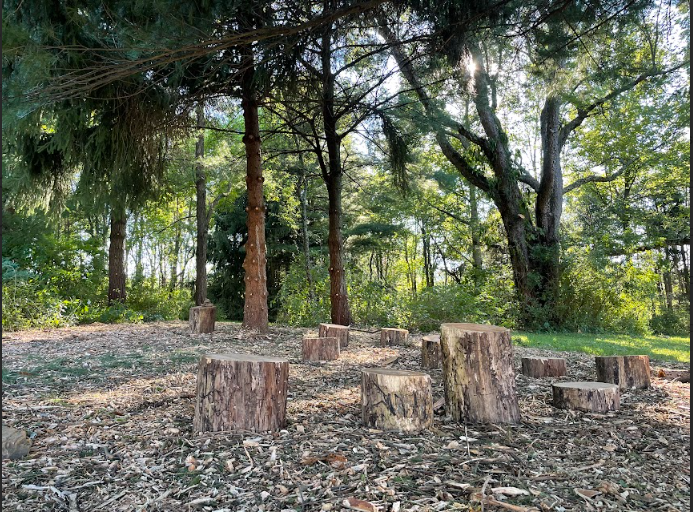

Photos of LEAP Setup Courtesy of Annie Brandt
Q: What is LEAP?
A: LEAP (Learning Expanded Through Active Play) is an outdoor play program that gives kids the opportunity for more outdoor free play at school. The program was originally designed to provide two, 15-minute outdoor play breaks in addition to regular recess. These LEAP periods are all about child-directed play and are meant to be outdoors, regardless of season or weather. This year, Latrobe Elementary School (another school in the district) is working towards implementation of the program. This school year, due to a district-wide schedule change, the program is one 15-minute play break rather than two.
Q:What impact does LEAP have on education?
A: The research supporting the benefits of play is substantial. Additionally, opportunities for free play in the school setting lead to improvements in not just academic achievement, but also attention, behavior, social skills, physical wellness, and even improved mental health.
Q: Why did you start LEAP?
A: Over my 16 years working in education, I have noticed that kids have far fewer opportunities for free play, which the research confirms is true. Today, kids are very scheduled outside of school, and time not spent in structured activities is often spent on electronics. Sports and screen time can have benefits, but both take away time for kids to play. This results in kids that have less ability to be independent, solve problems, self-regulate, and communicate and work together successfully with their peers. I had the opportunity to live and research in Finland through a Fulbright grant in 2016, which was an eye-opening experience that first got me interested in the research behind play. Students in Finland spend 15 minutes of every hour of the school day playing outside, and yet they are consistently ranked the highest in the world academically and in ratings of happiness. After returning home, I continued to dig into the research about play and also started to make some personal observations related to my own children’s experiences at school. I was interested in starting a play program even before the pandemic, but after in-person school resumed, the need for addressing the needs of the whole-child was even more in the forefront, particularly in the area of mental health. We can no longer wait and be reactive to mental health issues…we need to start looking at preventative measures, and I envisioned LEAP as one small piece of the solution. I received a scholarship to attend a conference about play and after returning home, pitched my idea to the administrators at my school district. I am very grateful to the administrative team for allowing me to pilot the program at Baggaley Elementary School.
Q: What improvements on education have you seen because of LEAP?
A: The program is still in its early stages, and comparing data from before the pilot started is difficult due to the timing of when the program started. The pilot started in 2022, the first year of truly “back to normal” school since before the pandemic. Moving forward, I hope to look for trends in the data across many areas of student need. I can report that the program has been very well received by students and parents, and we’ve had interest from surrounding school districts as well.
Q: What do you see for the future of LEAP in education?
A: My hope is that education continues to focus on meeting the needs of the whole-child. Students are more than just scores, and numbers don’t capture so many important aspects of learning, creativity, and growth. I hope that the message of LEAP can grow and more educators will embrace and understand the importance of play. Providing free-play time provides kids with a foundation to be inquisitive, creative, resilient, and collaborative. These are the types of skills that will be essential for students in all aspects of life, and beyond that, outdoor free play helps kids to be healthier and happier. It also leads to so many other benefits in the classroom…improved attention, behavior, social skills, and academic achievement. Programs like LEAP are a free-low cost tool, and by providing this simple opportunity to kids we can make the world a better place.
 The Insider
Leave a comment