
Professor Offers Advice on How to Avoid Misinformation in the Metaverse
by Skyler Currie
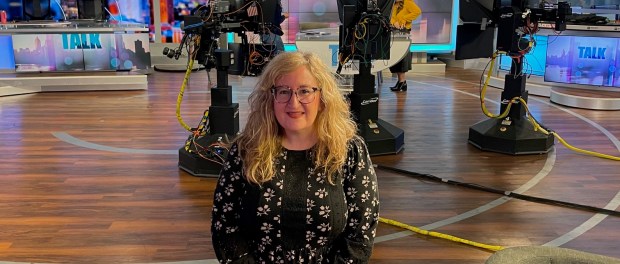 Photo Courtesy of Dr. Ghilani
Dr. Jessica Ghilani, associate professor of Communications at Pitt-Greensburg and Affiliate Scholar with the Pitt Cyber Institute for Cyber Law, Policy, and Security, has conducted research on misinformation and disinformation. Her expertise in fact-checking and censorship come from her desire to accurately teach others about the digital world that we live in.
“Fact-checking has long been a necessity,” Dr. Ghilani says. It allows audience members to hold news sources accountable if they mess up their information. “Censorship, on the other hand, in the first Amendment sense, refers to the government’s limits on speech.”
The recent change of political power has contributed to the debate about censorship and fact-checking, specifically in regards to Facebook, or Meta, Dr. Ghilani says. Mark Zuckerberg has expressed his decision to reduce the amount of fact-checking and censorship on his platforms, claiming that these actions had gone too far and had become politically biased.
To comply with their prior fact-checking protocols, “they partnered with a number of very reputable nonpartisan, independent organizations that have prided themselves on not having political bias,” Dr. Ghilani says. “The fact-checkers were explicitly not permitted to fact-check certain kinds of content that would interfere with the political advertising and political campaigning.”
Some Meta platform users have raised concerns about their freedom of speech being compromised due to fact-checking and censorship.
“Freedom of speech for me has never been about freedom to a venue for speech,” Dr. Ghilani says. She relates this idea to that of the “no shoes no service” policy that some restaurants have. She says that if users disagree with a platform’s terms, they can voice their opinions elsewhere.
Zuckerberg has indicated that he wants to adopt a community-based fact-checking policy, similar to the one Elon Musk implemented on his platform, X. This system allows users to fact-check each other’s posts. The criteria to post a note, at least on X, is very easy to meet, meaning that almost anyone is allowed to create one.
“Facebook has changed to this community moderation process, and it doesn’t matter if people like it or not, because they have so much power that they can do whatever they want,” Dr. Ghilani says. “What people can do at an individual level is decide if they want to participate in these platforms anymore.”
Eliminating fact-checking and censorship may lead to the spread of misinformation on Meta platforms. However, the debate whether you should be getting your information from social media platforms to begin with prevails.
“I think that social media is a terrible place to get information about consequential subjects,” Dr. Ghilani says. “That’s not to say there’s nothing of value on these platforms. It’s just to say that if you care about information integrity, then going to the source that’s producing information that has an editorial process, accountability mechanisms, and fact checking protocols is infinitely better.”
As fact-checking and censorship diminish on some platforms, and people struggle to find reliable information, individuals can still take steps to ensure their information is accurate.
Dr. Ghilani says that the process of lateral reading is one thing to do to help get accurate information. “Lateral reading is the practice of looking across different sources to confirm information before you jump to a conclusion,” she says. “Resist the temptation to break a story or feel like you’re the first person to post about something and resist the temptation to jump to conclusions before you’ve done lateral reading across different sources.”
Moving forward Dr. Ghilani says to be self aware when using these platforms and to be reflective about “what we get from them and what they’re getting from us.”
To learn more about these types of topics, Dr. Ghilani offers numerous media studies classes, and she has made appearances on several Talk Pittsburgh segments that can be found on the CBS website or YouTube.
 The Insider
Leave a comment